
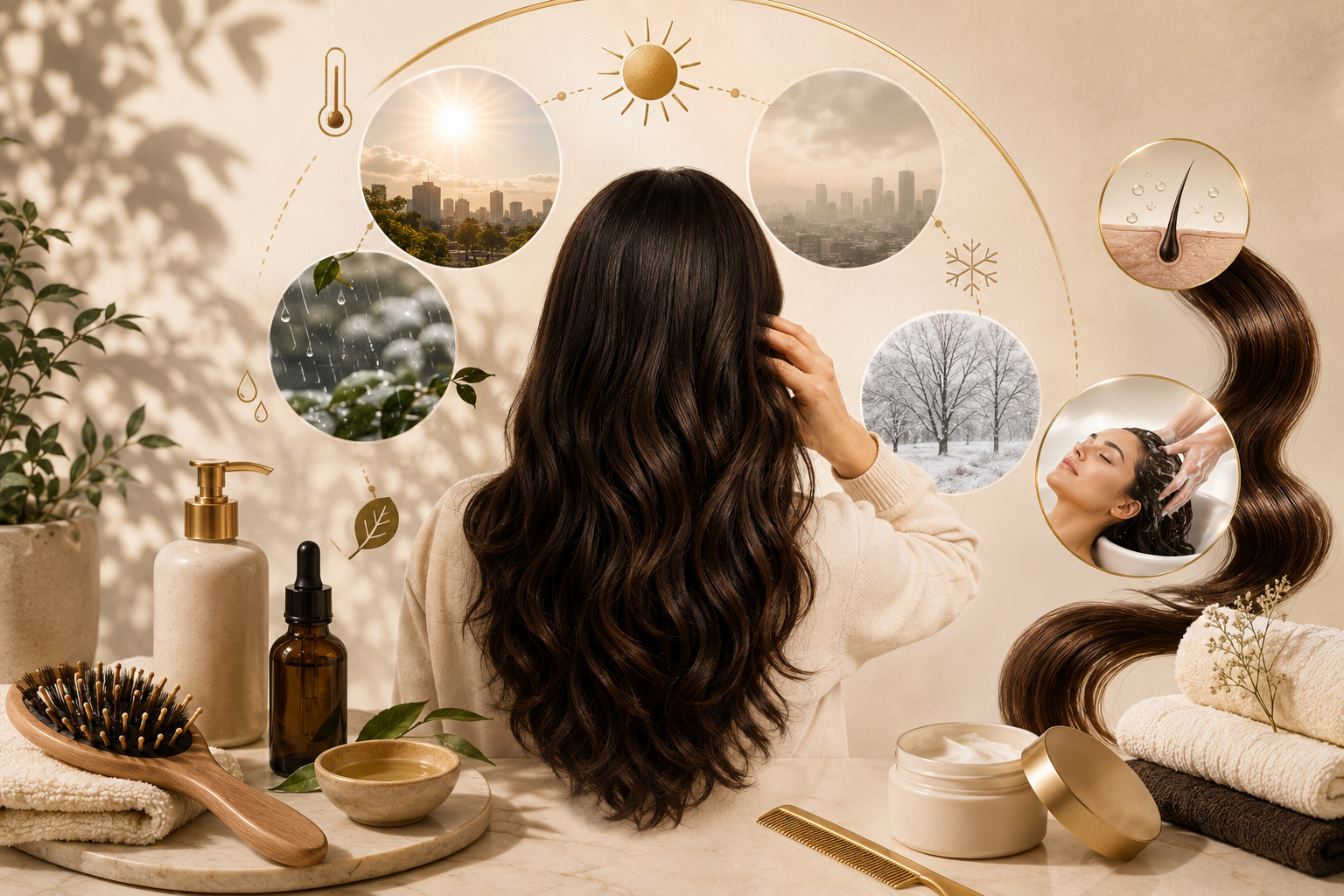
How Delhi’s Weather Affects Your Hair and Scalp: Complete Hair Care Guide
Living in Delhi means experiencing very different weather conditions throughout the year. From intense summer heat and humidity to monsoon moisture and dry winter air, your hair and scalp can react differently with every season.
If you have noticed frizz, dryness, oily roots, scalp buildup, dandruff or hair that simply feels difficult to manage, the weather may be one of the factors affecting your hair-care routine.
In this guide, we explain how Delhi weather affects your hair and scalp and what you can do to keep your hair looking healthy throughout the year.
How Does Delhi Weather Affect Your Hair?
Your hair and scalp are exposed to environmental conditions every day. Temperature, humidity, sunlight, sweat, pollution and seasonal changes can all influence how your hair feels and behaves.
For example, high humidity can make hair feel frizzy and difficult to manage, while cold and low-humidity conditions can contribute to a dry, itchy scalp.
Delhi’s air pollution is another consideration. The Delhi government identifies particulate matter such as PM2.5 and PM10 as important components of the city’s air pollution, with meteorological conditions influencing pollution episodes.
This is why your hair-care routine may need to change with the season.
Summer Hair and Scalp Problems in Delhi
Delhi summers can bring high temperatures, intense sunlight and sweating. Your scalp may become oily more quickly, while your hair lengths can become dry or frizzy.
Common summer hair concerns include:
Oily scalp
Excessive sweating
Frizz
Dry hair lengths
Product buildup
Scalp discomfort
Sun and heat exposure
Sweat and excess oil can accumulate on the scalp, while heat and humidity can make hair harder to manage. High humidity is also associated with increased frizz and changes in scalp comfort.
Summer hair-care tips
Keep your routine simple during hot weather.
Clean your scalp appropriately: If your scalp becomes sweaty or oily, gentle cleansing can help remove sweat, oil and buildup.
Avoid excessive heat styling: Frequent use of straighteners, curling irons and high-heat blow drying can add unnecessary stress to already heat-exposed hair.
Choose lightweight products: Heavy products may make an oily scalp feel even heavier during hot weather.
Protect your hair from direct sun: When spending extended periods outdoors, consider using a scarf, hat or other physical protection.
Monsoon Hair Care in Delhi
Monsoon weather can create a completely different set of challenges.
High humidity, rain, sweat and environmental pollutants can make hair feel greasy at the roots while the lengths become frizzy and difficult to control.
Why does humidity cause frizz?
Hair can absorb moisture from humid air. This can change the way the hair fibre behaves and contribute to a frizzy or less manageable appearance, particularly for wavy and curly hair.
Monsoon hair-care tips
Keep your scalp clean: Regular cleansing appropriate for your scalp type can help manage sweat and buildup.
Do not leave wet hair for too long: Allow your scalp and hair to dry properly after getting caught in rain.
Avoid excessive product buildup: Too many styling products can make hair feel heavy and greasy.
Use conditioner on the lengths: Conditioning can help make the hair easier to manage and reduce the rough feeling that often accompanies frizz.
Be gentle when detangling: Wet hair can be more vulnerable to mechanical damage, so avoid aggressive brushing.
Winter Hair and Scalp Problems in Delhi
Delhi winters can bring cold temperatures and lower humidity. This can make the scalp feel dry and uncomfortable and may contribute to flaking.
Cold, low-humidity weather is recognised as a factor that can dry the scalp.
You may notice:
Dry or flaky scalp
Rough hair
Increased frizz
Hair breakage
Static
Itchy scalp
Dull-looking hair
Winter hair-care tips
Avoid very hot showers: Hot water can strip natural oils from the scalp and leave it feeling drier.
Condition your hair regularly: A suitable conditioner can help improve softness and manageability.
Don’t over-wash unnecessarily: Your washing routine should depend on your scalp type and lifestyle rather than following a fixed schedule.
Pay attention to scalp care: If your scalp becomes persistently itchy, flaky or irritated, consider getting professional advice rather than simply adding more products.
Delhi Pollution and Your Hair
Weather isn’t the only environmental factor affecting your hair in Delhi.
Air pollution is an important part of the city’s environment, and pollutants can settle on exposed hair and scalp.
Over time, environmental buildup can contribute to hair feeling dull or dirty and can make your scalp feel uncomfortable.
This is one reason regular scalp cleansing and appropriate hair-care treatments can be useful as part of a personalised routine.
However, persistent scalp problems should not automatically be blamed on pollution. Conditions such as dandruff, dermatitis or psoriasis can have different causes and may require professional diagnosis.
How to Build a Hair-Care Routine for Delhi Weather
Instead of using exactly the same routine throughout the year, pay attention to how your hair and scalp are behaving.
If your scalp is oily:
Focus on appropriate cleansing and avoid excessive heavy products around the roots.
If your hair is dry:
Prioritise conditioning and gentle handling. Reduce unnecessary heat styling.
If your hair is frizzy:
Use suitable conditioning products and avoid excessive brushing or heat.
If your scalp feels dry:
Use a gentle hair-care routine and avoid very hot water. If dryness, itching or flaking continues, professional advice may be appropriate.
Should You Get a Professional Hair or Scalp Treatment?
Sometimes your regular home routine may not be enough to give you the relaxing, deep-care experience you are looking for.
Professional hair treatments and scalp-focused treatments can be incorporated into your self-care routine depending on your hair and scalp needs.
A consultation can help you understand whether your main concern is dryness, buildup, damaged hair, an oily scalp or simply the need for a relaxing maintenance treatment.
For those interested in a scalp-focused experience, a Korean scalp spa can be an option to explore. Unlike a traditional hair-focused treatment, scalp spa experiences place particular attention on cleansing, massage and scalp care.
Simple Year-Round Hair Care Tips for Delhi
Regardless of the season, a few habits can help you maintain a consistent hair-care routine:
Choose products according to your hair and scalp type.
Avoid excessive heat styling.
Don’t use very hot water on your scalp.
Keep your scalp appropriately clean.
Condition your hair lengths regularly.
Protect your hair when spending long periods outdoors.
Be gentle while brushing and detangling.
Change your routine when the weather changes.
Avoid blindly following hair-care trends.
Seek professional advice for persistent scalp concerns.
When Should You Consider Professional Help?
Not every hair or scalp problem is simply caused by Delhi weather.
If you experience persistent itching, severe flaking, redness, sudden or significant hair loss, bald patches or other unusual changes, it is better to consult a qualified dermatologist or healthcare professional.
A salon can help with cosmetic hair care and maintenance, but medical scalp conditions may require medical evaluation.
Take Care of Your Hair in Every Delhi Season
Delhi’s changing weather means your hair-care routine may need to change too.
Summer can bring heat, sweat and humidity. Monsoon can bring moisture, frizz and buildup. Winter can bring dryness and a more sensitive scalp.
Understanding what your hair and scalp need in each season can help you create a more effective and consistent routine.
At Beauty Station, we believe that hair care should be personalised rather than one-size-fits-all. Whether you are looking for regular hair maintenance, a nourishing hair treatment or a relaxing scalp-care experience, choosing the right service for your individual needs can make your salon visit more rewarding.