
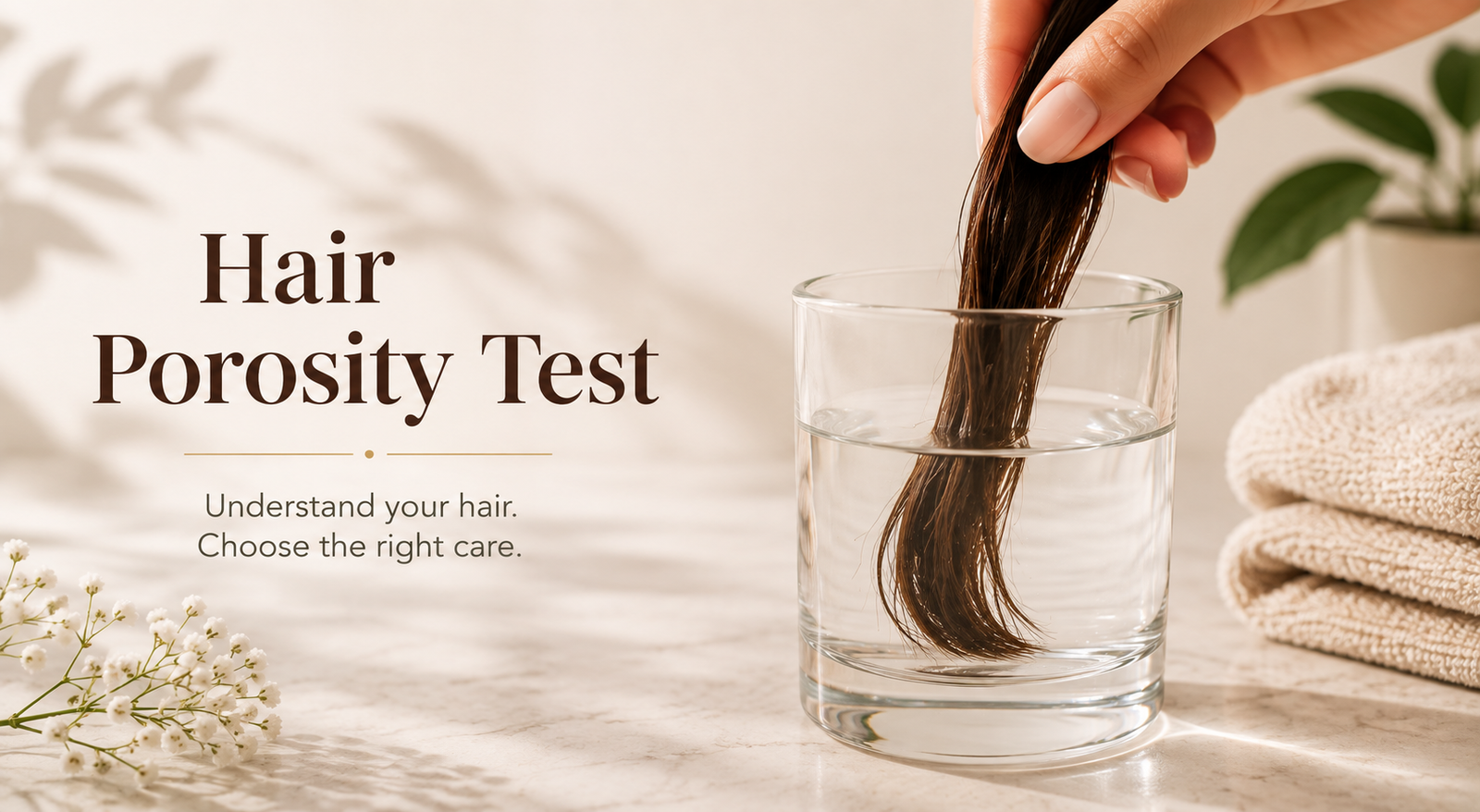
Hair Porosity Test: How to Know Your Hair Porosity & Care for It
Have you ever wondered why the same hair-care routine works beautifully for someone else but leaves your hair feeling dry, greasy, or weighed down?
The answer could be hair porosity.
Hair porosity refers to how easily your hair absorbs and retains moisture. Understanding your hair’s porosity can help you choose better products, treatments, and routines for healthier-looking hair.
What Is Hair Porosity?
Hair porosity is mainly determined by the condition and structure of your hair’s cuticle – the outermost layer of the hair shaft.
There are generally three types of hair porosity:
-
Low porosity
-
Medium porosity
-
High porosity
Your hair can naturally have a certain porosity, but chemical treatments, heat styling, colouring, bleaching, sun exposure, and repeated damage can also affect how porous your hair becomes.
How to Check Your Hair Porosity at Home
You may have seen the popular hair float test online, where you place a strand of hair in a glass of water.
While this can be a fun experiment, it isn’t considered a reliable way to determine your hair porosity. Products, oils, buildup, and even the condition of the hair strand can affect the result.
Instead, pay attention to how your hair reacts to water and products.
1. Low Porosity Hair
Low-porosity hair has a tighter cuticle structure, which can make it harder for moisture to enter the hair.
You may notice:
-
Water takes time to fully soak into your hair
-
Products tend to sit on the surface
-
Your hair gets buildup easily
-
Heavy creams and oils can make your hair feel greasy
-
Your hair may take a long time to become completely wet
How to Care for Low Porosity Hair
Choose lightweight, water-based products and avoid applying too much product at once.
Gentle cleansing is also important because buildup can prevent moisture from reaching the hair effectively.
2. Medium Porosity Hair
Medium-porosity hair generally absorbs and retains moisture relatively well.
You may notice:
-
Hair gets wet fairly easily
-
Products absorb without sitting heavily on the hair
-
Hair is relatively easy to manage
-
Your hair holds styles reasonably well
-
It doesn’t usually require excessive amounts of product
Medium-porosity hair often needs a balanced routine that includes cleansing, conditioning, and occasional deep conditioning.
However, excessive heat, chemical treatments, and colouring can gradually increase porosity.
3. High Porosity Hair
High-porosity hair has more gaps or openings in the cuticle, allowing moisture to enter easily – but it can also escape quickly.
This is commonly seen in hair that has experienced significant heat, chemical, colouring, or bleaching damage.
You may notice:
-
Hair becomes wet very quickly
-
Hair dries quickly
-
Frizz is common
-
Ends feel dry or rough
-
Hair tangles easily
-
Hair may be prone to breakage
-
It can be difficult to retain moisture
How to Care for High Porosity Hair
High-porosity hair usually benefits from a consistent moisture and conditioning routine.
Deep-conditioning treatments, nourishing hair masks, and gentle handling can help improve the look and feel of dry, damaged hair.
If your hair has significant chemical or heat damage, professional salon treatments may also be worth considering.
Is Hair Porosity the Same as Hair Type?
No.
Hair type generally refers to your natural curl or wave pattern – such as straight, wavy, curly, or coily hair.
Hair porosity refers to how your hair interacts with moisture.
For example, you can have:
-
Straight, low-porosity hair
-
Wavy, medium-porosity hair
-
Curly, high-porosity hair
This is why choosing hair products based only on whether your hair is straight or curly doesn’t always work.
Why Does Hair Porosity Matter?
Knowing your hair porosity can help you understand why your hair behaves the way it does.
For example, if your hair gets greasy easily despite feeling dry, you may be using products that are too heavy for your hair.
If your hair feels dry, frizzy, and rough despite regular conditioning, you may need a stronger focus on moisture and damage repair.
Understanding these differences can make your hair-care routine much more personalised.
Can Hair Porosity Change?
Yes – especially the condition of your hair can change over time.
Your natural hair characteristics don’t necessarily change overnight, but damage can make the hair more porous.
Frequent:
-
Bleaching
-
Hair colouring
-
Chemical treatments
-
Heat styling
-
Sun exposure
-
Rough brushing
can damage the cuticle and affect the hair’s ability to retain moisture.
This is why your hair-care needs may change over time.
When Should You Consider a Professional Hair Treatment?
If your hair is consistently dry, frizzy, brittle, tangled, or difficult to manage despite following a good home-care routine, it may be time to get a professional assessment.
At a professional salon, your stylist can look at your hair’s condition, previous chemical treatments, texture, dryness, and damage before recommending a suitable treatment.
The goal shouldn’t be to follow a viral hair-care trend – it should be to understand what your hair actually needs.
Final Thoughts
Hair porosity is just one part of understanding your hair, but it can give you useful clues about how your hair absorbs and retains moisture.
Instead of constantly switching between trending products, start by paying attention to how your hair behaves.
Healthy hair isn’t about following every trend. It’s about understanding your hair and giving it the care it actually needs.
Looking for personalised advice for your hair? Visit Beauty Station and speak with our hair professionals about the right treatment and care routine for your hair.
Frequently Asked Questions
How can I test my hair porosity at home?
Pay attention to how quickly your hair absorbs water, how it reacts to products, and how easily it retains moisture. The popular water-float test is not a reliable scientific test on its own.
Is low porosity hair bad?
No. Hair porosity isn’t inherently good or bad. It simply helps describe how your hair interacts with moisture.
Which hair porosity is most common?
There isn’t one porosity type that is universally considered the most common. Porosity can vary based on natural hair characteristics and the amount of damage your hair has experienced.
Can damaged hair become more porous?
Yes. Bleaching, colouring, excessive heat, and chemical processing can damage the cuticle and make hair more porous.
Should I choose products based only on hair porosity?
No. Consider your hair texture, scalp condition, level of damage, styling habits, and overall hair needs as well.