
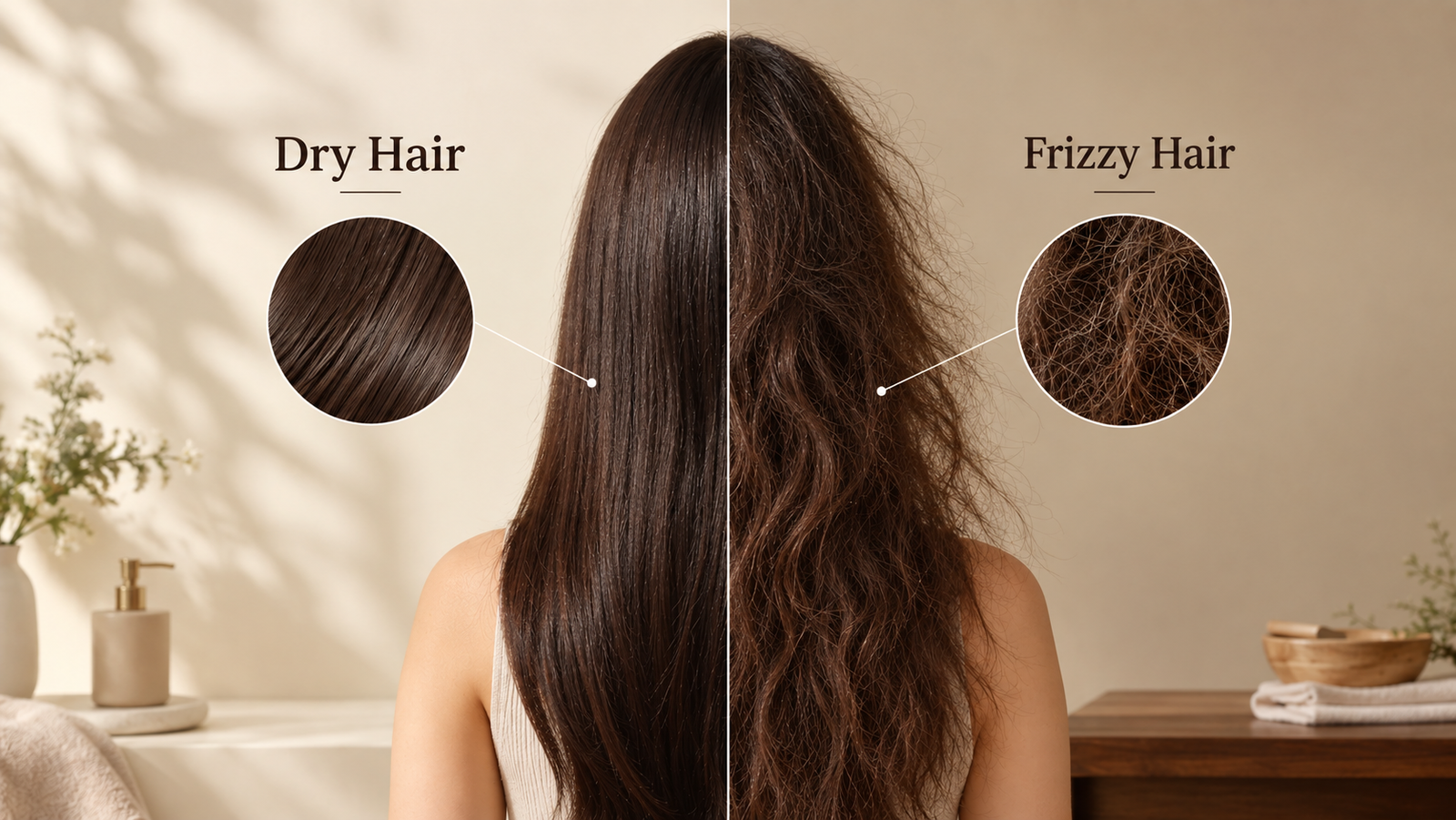
Dry Hair vs Frizzy Hair: What’s the Difference and How to Treat It?
Dry hair and frizzy hair are two common hair concerns that are often confused with each other. While they can occur together, dry hair and frizzy hair are not exactly the same thing.
Dry hair is mainly related to a lack of moisture, while frizz is often associated with the hair cuticle becoming raised or uneven. Understanding the difference can help you choose the right hair care routine and products for your hair.
In this guide, we’ll explain the difference between dry and frizzy hair, what causes them, and how you can manage both for smoother, healthier-looking hair.
What Is Dry Hair?
Dry hair occurs when the hair doesn’t retain enough moisture. Hair may feel rough, look dull, or become difficult to manage.
Healthy-looking hair generally has a smoother outer layer, known as the cuticle, which helps retain moisture. When the hair becomes excessively dry or damaged, it may lose moisture more easily.
Common signs of dry hair
You may have dry hair if your hair:
Feels rough or coarse
Looks dull instead of shiny
Becomes tangled easily
Has dry or split ends
Feels brittle
Breaks more easily than usual
Feels dry soon after washing
Dry hair can affect any hair type, including straight, wavy, curly, and coily hair.
What Is Frizzy Hair?
Frizzy hair refers to strands that don’t lie smoothly with the rest of the hair. Instead, individual strands may stick out, creating a fluffy, unruly, or uneven appearance.
Frizz can happen because of several factors, including humidity, hair texture, damage, friction, and moisture imbalance.
People with naturally wavy or curly hair may notice frizz more easily because of their hair’s natural structure.
Common signs of frizzy hair
Frizzy hair may:
Look fluffy or unruly
Have flyaways around the hairline
Become more difficult to control in humid weather
Lose its defined shape
Look rough even after styling
Become frizzier after brushing or towel drying
Dry Hair vs Frizzy Hair: What’s the Difference?
Although dry hair can contribute to frizz, they describe different problems.
| Dry Hair | Frizzy Hair |
|---|---|
| Mainly related to insufficient moisture | Mainly describes how hair strands behave |
| Often feels rough or coarse | Often looks fluffy or unruly |
| May appear dull | May appear uneven or undefined |
| Can be associated with breakage and split ends | Can be associated with flyaways |
| Benefits from moisture and conditioning | Benefits from moisture, gentle handling and frizz control |
The important thing to remember is that you can have dry hair without significant frizz, and you can have frizzy hair without severely dry hair.
What Causes Dry Hair?
Several everyday habits and environmental factors can contribute to dry hair.
1. Excessive heat styling
Frequent use of straighteners, curling irons, and high-heat blow-drying can contribute to hair damage and dryness.
2. Washing your hair too frequently
Washing too often, especially with products that are not suitable for your hair type, may leave hair feeling dry.
3. Chemical treatments
Hair colouring, bleaching, straightening, and other chemical processes can affect the hair’s structure and moisture balance.
4. Hot water
Very hot showers can leave both the scalp and hair feeling dry. Try using lukewarm water instead.
5. Sun and environmental exposure
Sun exposure, dry weather, pollution, and other environmental conditions can affect the way your hair feels and behaves.
6. Not conditioning regularly
Skipping conditioner can leave the lengths and ends feeling rough, particularly if your hair is naturally dry or damaged.
What Causes Frizzy Hair?
Frizz can have several different causes.
Humidity
One of the biggest reasons hair becomes frizzy is humid weather. Moisture in the surrounding air can affect the hair’s behaviour, especially if the hair is already porous or damaged.
Hair damage
Damaged hair can have a less uniform cuticle, making it harder for strands to stay smooth.
Lack of moisture
When hair is dry, it can become more prone to frizz and flyaways.
Rough towel drying
Aggressively rubbing your hair with a towel can create friction and contribute to a rougher appearance.
Excessive brushing
Brushing too aggressively or using the wrong brush for your hair type can increase friction and disrupt the natural pattern of wavy or curly hair.
Can Dry Hair Cause Frizz?
Yes, dry hair can contribute to frizz.
When hair doesn’t retain enough moisture and the outer cuticle is not lying smoothly, individual strands can become harder to control. However, dryness isn’t the only cause of frizz.
Your hair texture, humidity, damage, styling habits, and the products you use can all influence how much frizz you experience.
That’s why simply using an “anti-frizz” product may not be enough if the underlying issue is very dry or damaged hair.
How to Treat Dry Hair
If your main concern is dryness, focus on helping your hair retain moisture and reducing unnecessary damage.
1. Choose a suitable shampoo
Choose a shampoo according to your scalp and hair needs. If your lengths are dry, avoid using unnecessarily harsh cleansing products.
2. Don’t skip conditioner
Apply conditioner mainly to the mid-lengths and ends. Leave it on for the recommended amount of time before rinsing.
3. Use a hair mask
A nourishing hair mask can provide additional conditioning when your hair feels particularly dry or rough.
Using a mask once or twice a week can be a useful addition to a regular hair care routine, depending on your hair’s needs.
4. Reduce excessive heat
Try to limit frequent high-heat styling. When using heat tools, use an appropriate heat-protective product and avoid unnecessarily high temperatures.
5. Be gentle when drying
Instead of aggressively rubbing your hair, gently squeeze out excess water and pat or wrap your hair with a soft towel or T-shirt.
6. Trim damaged ends
If your ends are severely split or damaged, trimming them can make the hair look and feel healthier. Hair products can improve the appearance and manageability of damaged hair, but they cannot permanently repair a split end.
How to Treat Frizzy Hair
Managing frizz is about more than simply adding more product. Your daily hair habits matter too.
1. Keep your hair conditioned
Well-conditioned hair is generally easier to detangle and manage. Use a conditioner that suits your hair type after shampooing.
2. Avoid excessive brushing
If you have naturally wavy or curly hair, excessive dry brushing can disrupt your natural pattern and make the hair appear more frizzy.
3. Use a wide-tooth comb
A wide-tooth comb can help detangle hair more gently, especially when used carefully on damp hair.
4. Minimise friction
Avoid aggressively rubbing your hair with towels or constantly pulling and brushing it.
5. Protect your hair from heat
If you regularly blow-dry, straighten, or curl your hair, use heat protection and avoid excessive heat exposure.
6. Choose products according to your hair type
Fine, straight hair may need a lighter routine, while thick, wavy, curly, or highly porous hair may benefit from richer conditioning products.
There is no single “best” hair care routine for everyone.
Best Hair Care Routine for Dry and Frizzy Hair
If you’re dealing with both dry and frizzy hair, keep your routine simple and consistent.
Step 1: Cleanse
Wash your scalp with a suitable shampoo. Focus the shampoo on the scalp rather than aggressively scrubbing the lengths.
Step 2: Condition
Apply conditioner to your mid-lengths and ends. Allow it to sit for the recommended time.
Step 3: Deep condition
Use a suitable hair mask once or twice a week if your hair needs additional conditioning.
Step 4: Detangle gently
Use a wide-tooth comb and start from the ends, gradually working upward.
Step 5: Dry gently
Avoid vigorous towel rubbing. Gently remove excess water instead.
Step 6: Protect before heat styling
If you use a blow dryer or heat styling tools, use heat protection and keep the temperature as controlled as practical.
Step 7: Be consistent
Healthy-looking hair is usually the result of consistent care rather than one single product or treatment.
How to Prevent Dry and Frizzy Hair
A few simple habits can make your routine more hair-friendly:
Avoid washing with very hot water
Don’t overuse heat styling tools
Condition your hair regularly
Use a hair mask when needed
Avoid aggressive towel drying
Detangle gently
Trim severely damaged ends
Protect hair during heat styling
Choose products according to your hair type
Avoid constantly changing your routine
When Should You Get Professional Advice?
If your hair is experiencing sudden or severe breakage, significant thinning, persistent scalp irritation, or major changes in texture, it’s worth speaking with a dermatologist or qualified hair professional.
Sometimes what looks like a simple hair-care problem can have an underlying scalp or health-related cause.
Final Thoughts
The difference between dry hair and frizzy hair is simple: dryness is primarily about moisture, while frizz describes how the hair behaves and appears.
The two often occur together, but they don’t always have the same cause.
If your hair feels dry, focus on gentle cleansing, regular conditioning, and reducing damage. If your main concern is frizz, pay attention to moisture, friction, humidity, hair texture, and styling habits.
The best approach is to understand what your hair actually needs rather than choosing products based only on words like “anti-frizz” or “moisturising.”
With a consistent routine and the right products for your hair type, you can improve manageability and achieve smoother, healthier-looking hair over time.
Frequently Asked Questions
Is dry hair the same as frizzy hair?
No. Dry hair refers mainly to a lack of moisture, while frizzy hair describes strands that don’t lie smoothly with the rest of the hair. They can occur together but are not the same problem.
How can I fix dry and frizzy hair naturally?
Start with gentle washing, regular conditioning, less heat styling, gentle towel drying, and avoiding excessive brushing. Your routine should also be suited to your hair type.
Does frizzy hair mean damaged hair?
Not necessarily. Frizz can be caused by humidity and natural hair texture as well as damage. However, damaged hair can be more prone to frizz.
How often should I use a hair mask for dry hair?
For many people, once or twice a week can be a reasonable starting point, but the ideal frequency depends on your hair type, condition, and the specific product.
What is better for frizzy hair: oil or hair mask?
They serve different purposes. A hair mask primarily provides conditioning, while an oil may help with softness, shine, and reducing the feel of dryness. The better option depends on your hair type and routine.