
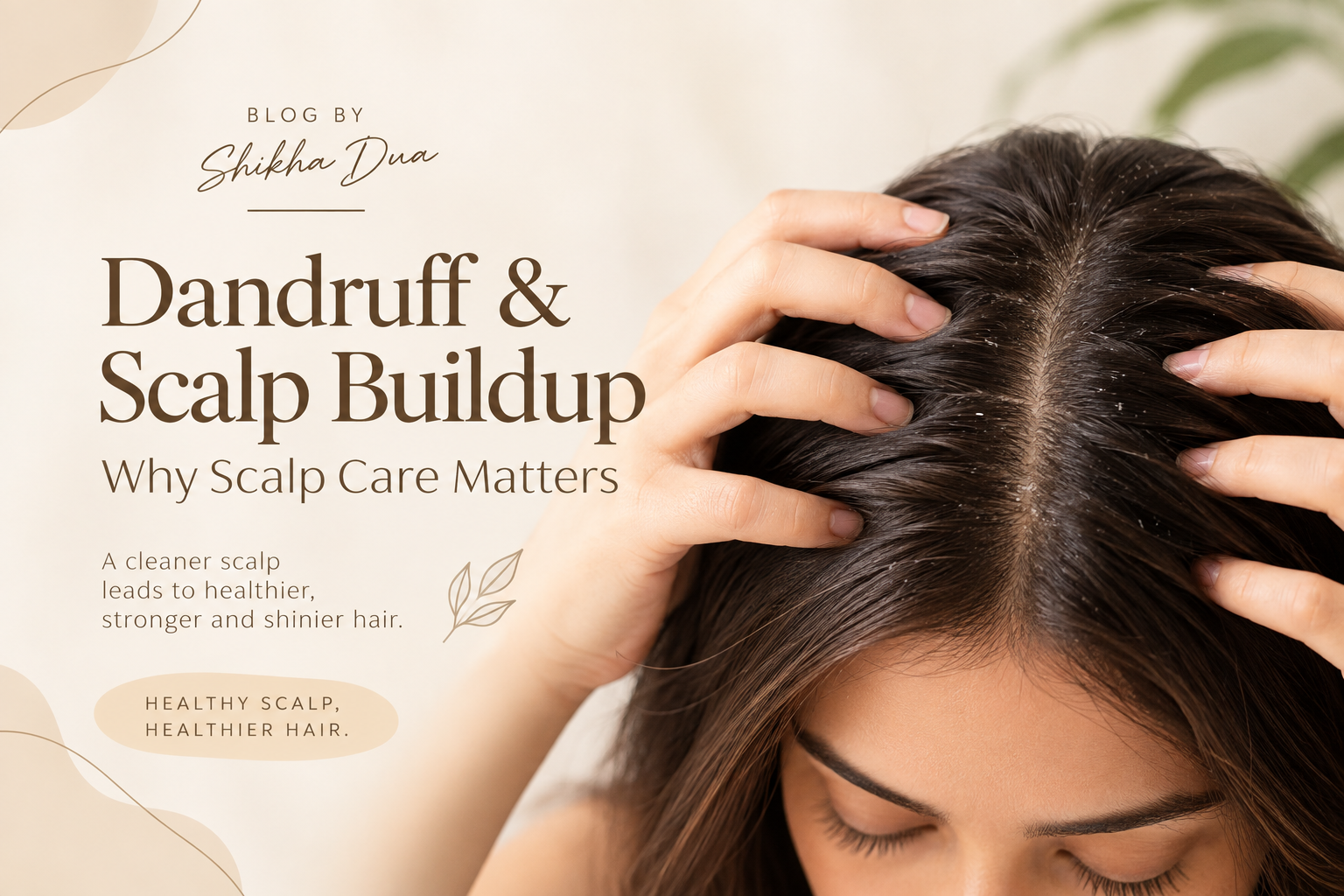
Dandruff & Scalp Buildup: Why Scalp Care Matters
A healthy hair routine starts at the scalp. While we often focus on shampoos, conditioners, hair masks and styling products, the scalp is the foundation from which healthy-looking hair grows.
If you notice flakes, itching, excess oil, product residue or a heavy feeling on your scalp, it may be a sign that your scalp needs more attention.
What Is Scalp Buildup?
Scalp buildup refers to the accumulation of things such as dead skin cells, excess sebum (natural oil), sweat and residue from hair-care products. This can leave the scalp feeling greasy, itchy or uncomfortable.
Regular cleansing helps remove everyday buildup, but the right routine depends on your scalp and hair type.
Dandruff vs. Dry Scalp: Are They the Same?
Not necessarily.
Both can cause flaking and itching, but they have different underlying causes. Dry scalp is generally associated with a loss of moisture, while dandruff is commonly associated with excess oil and conditions such as seborrheic dermatitis.
Dandruff can appear as visible flakes and may be accompanied by itching. It is also not simply a result of poor hygiene; several factors can contribute to it.
Why Does Scalp Care Matter?
1. It Helps Keep the Scalp Clean
Your scalp is exposed to sweat, oil, pollution and styling products every day. Appropriate cleansing helps remove excess oil and residue and keeps the scalp feeling fresh.
2. It Can Help With Visible Flaking
For mild dandruff, dermatologists commonly recommend appropriately used anti-dandruff shampoos. Ingredients such as ketoconazole, selenium sulfide, salicylic acid and zinc pyrithione may be used depending on the product and individual needs.
3. It Supports a Healthier Hair-Care Routine
When the scalp is cared for properly, your hair-care routine can become more effective and comfortable. Scalp care should focus on the skin of the scalp, rather than treating the hair lengths alone.
4. It Helps You Notice Scalp Problems Earlier
Persistent itching, heavy scaling, redness, scabbing or unusual hair shedding shouldn’t simply be treated as “normal dandruff.” Conditions such as seborrheic dermatitis, psoriasis, eczema and fungal infections can sometimes cause similar symptoms.
What Can You Do for Scalp Buildup?
A simple scalp-care routine can include:
- Washing according to your scalp and hair type
- Thoroughly rinsing shampoo and conditioner
- Avoiding excessive use of heavy styling products
- Keeping the scalp clean after heavy sweating
- Choosing products appropriate for your scalp
- Avoiding aggressive scratching or scrubbing
If you have persistent dandruff, an appropriate anti-dandruff shampoo may be more suitable than simply adding more cosmetic scalp treatments.
What About Professional Scalp Treatments?
Professional scalp treatments can be a useful cosmetic and relaxation-focused addition to a hair-care routine.
At Beauty Station, scalp-focused treatments such as the Organic Korean Scalp Spa are designed around scalp cleansing, exfoliation, hydration, massage and personalized scalp care.
The important distinction is that a salon treatment should not be considered a medical treatment for conditions such as severe dandruff, psoriasis or fungal infections.
When Should You See a Dermatologist?
If your dandruff is persistent, severe, painful, associated with significant redness or scabbing, or does not improve with appropriate over-the-counter care, a dermatologist can help determine the underlying cause.
Final Thoughts
Healthy-looking hair begins with taking care of the scalp.
Dandruff and scalp buildup aren’t always the same thing, and the right approach depends on what your scalp actually needs. Instead of focusing only on the hair lengths, make scalp care an important part of your overall hair-care routine.
Clean scalp. Balanced care. Healthier-looking hair.